Digital Twins Explained: How Virtual Models Mirror the Real World

A machine on a factory floor can tell you what it is doing right now. Its digital twin is meant to help you understand why it is doing it, what may happen next, and what could change under different conditions.
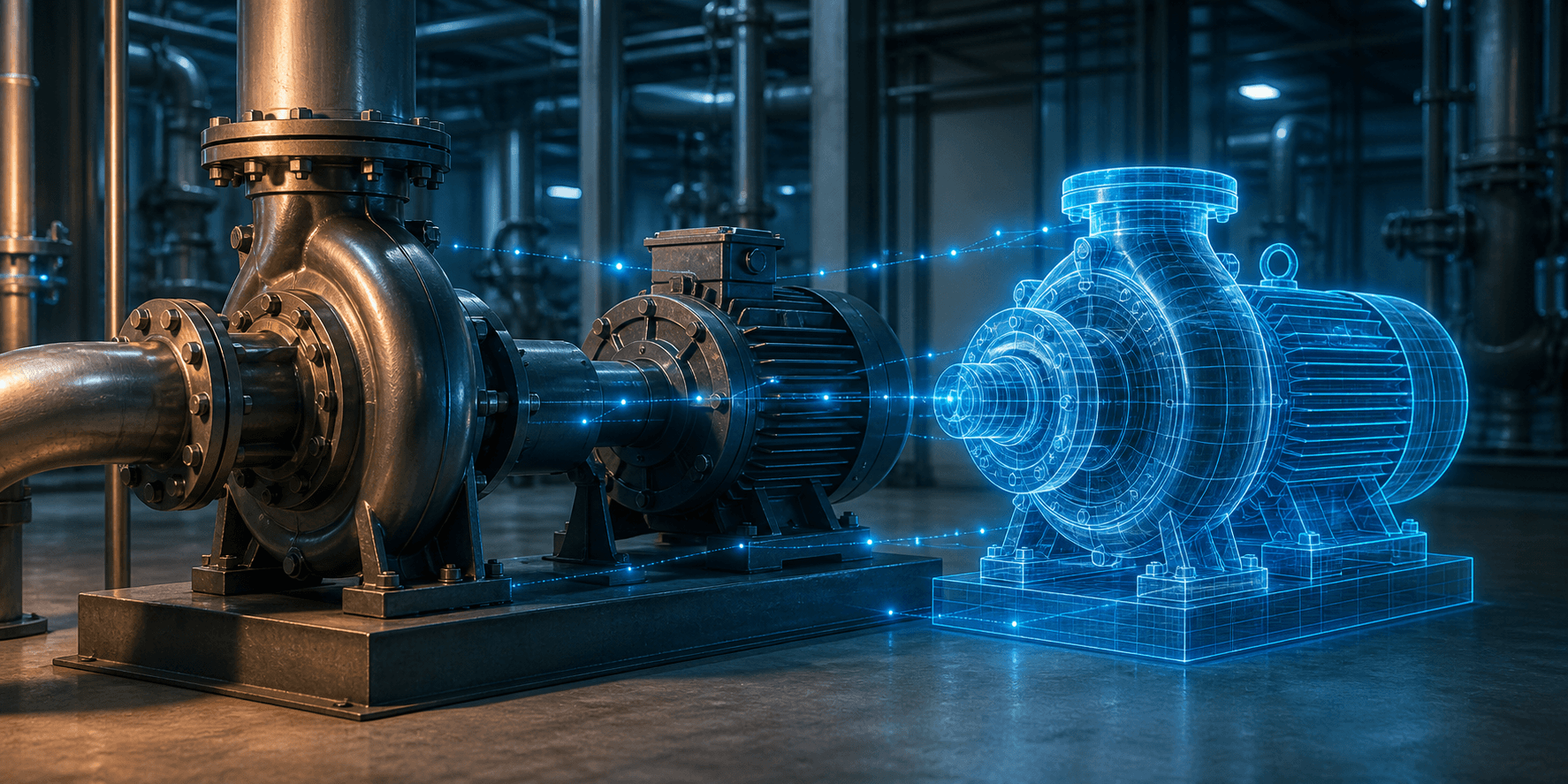
That sounds like a very elaborate copy, but the word "twin" can be misleading. A digital twin is not simply a 3D drawing, a dashboard, or a simulation saved on a computer. It is a virtual representation connected to a real object, process, or system through data. As the physical system changes, the digital version is updated so it remains useful.
The result can help people monitor equipment, test decisions, plan maintenance, and explore scenarios without experimenting on the real system first. The value does not come from making the most detailed model possible. It comes from building a model that supports a real decision.
What makes a model a digital twin?
Imagine a building engineer has a detailed 3D model of an office tower. The model shows every room, pipe, and air conditioning unit. It may be excellent for design, but it is still a static model if it does not reflect what is happening in the building.
Now connect that model to temperature sensors, electricity meters, equipment controllers, maintenance records, and occupancy data. Update it as conditions change. Let engineers compare expected performance with actual performance and test how a proposed change may affect comfort or energy use. That is much closer to a digital twin.
Definitions vary across industries, but useful digital twins tend to share three qualities:
- They represent a specific physical subject. The subject may be one motor, an assembly line, a building, a wind farm, or an entire process.
- They receive relevant data from that subject. Updates may arrive continuously, every few minutes, after an inspection, or at another interval suited to the decision.
- They produce useful insight or action. People use the model to understand current conditions, forecast possible outcomes, compare choices, or control part of the system.
A digital twin therefore has an ongoing relationship with the thing it represents. Without that connection, it is better described as a digital model or simulation.
How the physical and digital sides stay connected
Most digital twins combine several layers of technology. The exact design depends on what the twin must do, but the basic loop is consistent.
The physical system creates signals
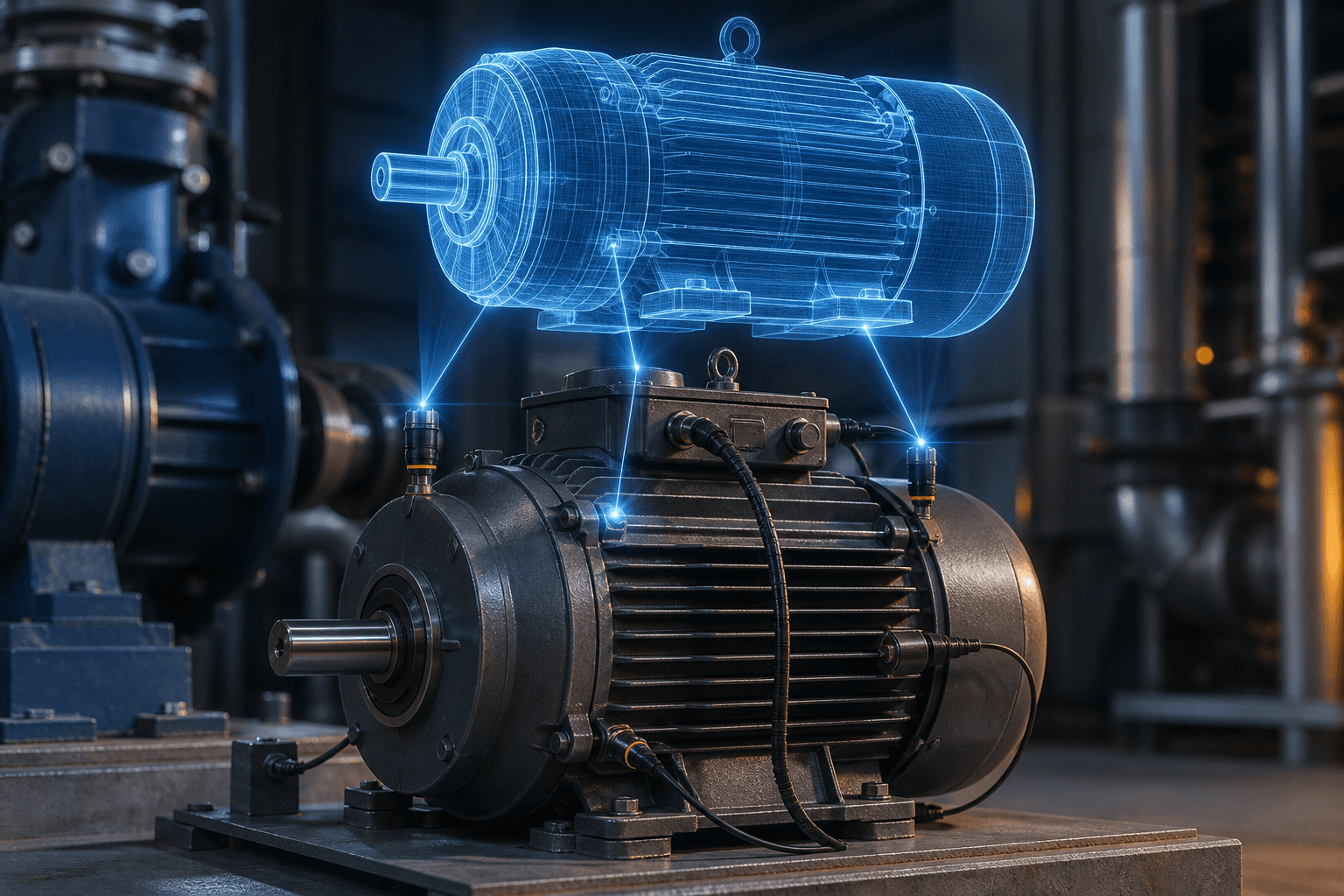
Sensors and existing control systems collect measurements such as temperature, vibration, pressure, speed, power use, location, or equipment state. Maintenance notes and inspection results can add context that sensors cannot capture.
Not every measurement needs to travel to a distant data center. Systems can filter or analyze time-sensitive readings near the equipment, using the same principle described in our guide to processing data closer to where it is created.
A data pipeline organizes the updates
Raw readings are rarely ready for a model. They need timestamps, consistent units, equipment identifiers, and checks for missing or implausible values. The pipeline moves this cleaned information into storage and into the twin at the required pace.
This work may use local computers, cloud services, or both. Cloud computing infrastructure is useful when a twin must combine long histories, serve many users, or run demanding simulations. Local processing is useful when fast reactions, unreliable connectivity, or sensitive data matter.
The virtual model interprets the system
The model can combine engineering equations, geometry, historical behavior, business rules, and statistical methods. A simple twin might compare a motor's current vibration with its normal range. A more complex twin might simulate heat, airflow, wear, or production flow across a facility.
Machine learning can also identify patterns in large histories or estimate outcomes that are difficult to calculate directly. Our beginner's explanation of machine learning algorithms covers the foundation. Machine learning is optional, though. A digital twin does not become more useful merely because AI is added to it.
People or systems act on the result
The twin may alert a technician, recommend an inspection, compare operating plans, or send a carefully bounded instruction back to equipment. This completes the loop. Any automated control needs clear limits, validation, security, and a safe way for people to intervene.
What digital twins are useful for
The most common use is seeing a system more clearly. A twin can combine scattered readings into one coherent view, which helps operators find the part of a process causing a wider problem.
The next step is forecasting. If a machine is gradually running hotter and vibrating more, the model can help estimate whether the change is normal, caused by current operating conditions, or a sign that inspection is needed. This is more useful than replacing parts on a fixed schedule, but it is not a guarantee that the model can predict every failure.
Digital twins also let teams test scenarios before changing physical equipment. A factory can compare production schedules. A building team can explore ventilation settings. An energy operator can examine how maintenance may affect available capacity. Testing in a model is faster and safer, provided the model has been validated for that specific question.
Finally, a twin can preserve knowledge across a system's life. Design assumptions, installation details, operating data, repairs, and later modifications can stay connected to the same asset. That history helps a new technician understand why the real system differs from its original drawings.
Where digital twins appear
Manufacturing
Manufacturers use twins to study machine health, production flow, quality, setup changes, and maintenance plans. A twin of one machine may be valuable on its own. A line-level twin can show how one slow or unreliable step affects everything around it.
Buildings and infrastructure
Building twins can combine geometry with information about heating, cooling, lighting, occupancy, and energy use. Infrastructure operators can use similar models for assets such as bridges, water systems, and transport networks. The scope must stay manageable: a detailed city model is not automatically a useful city twin.
Energy and transport
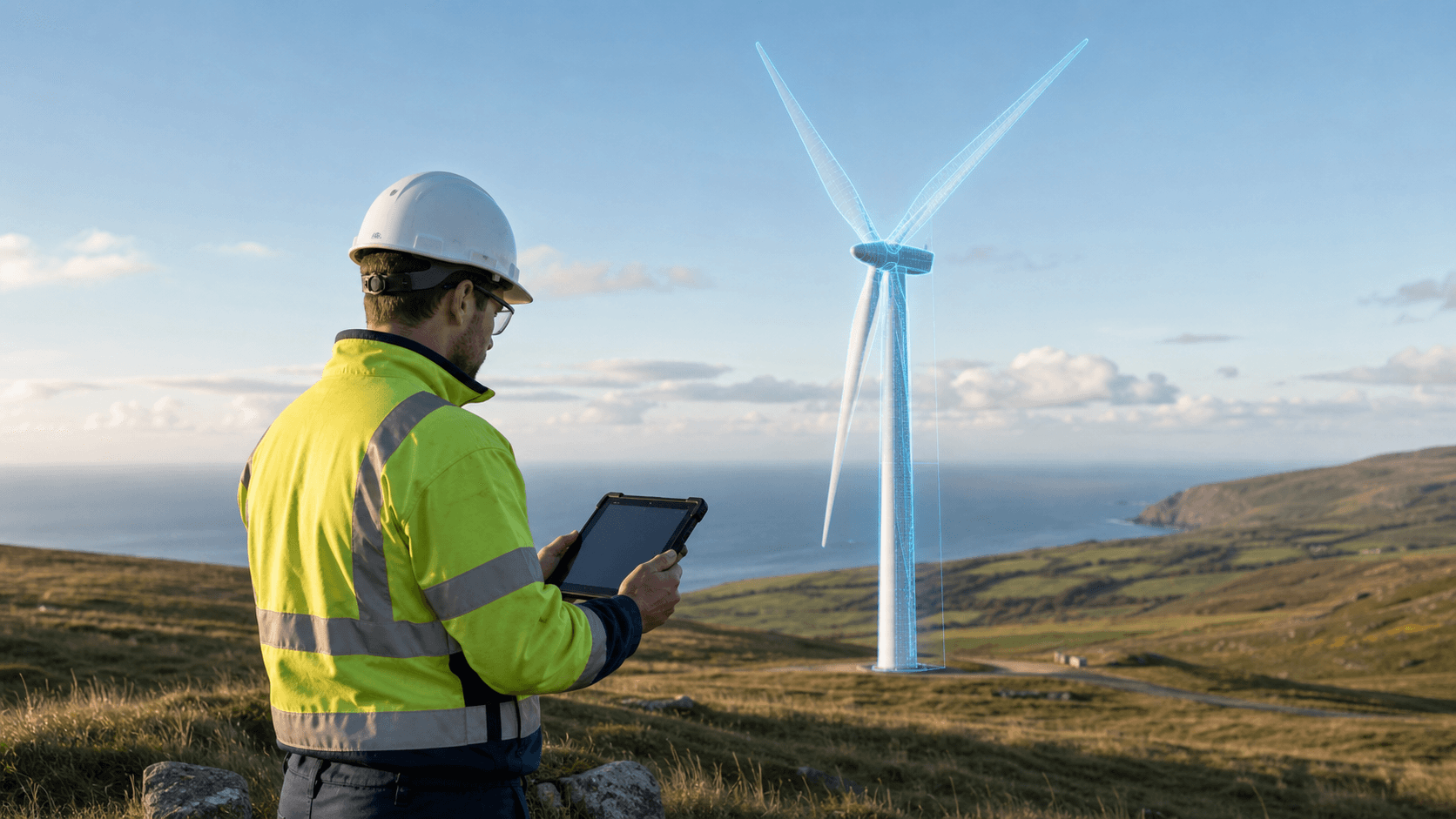
Wind turbines, power equipment, vehicles, and fleets operate under changing loads and environmental conditions. Digital twins can help teams compare expected performance with field behavior, schedule maintenance, and test operating choices without interrupting the real asset.
Why digital twins can become untrustworthy
A twin can look precise while being wrong. Several problems deserve more attention than the visualization itself.
Bad input data creates false confidence. A drifting sensor, wrong timestamp, missing unit, or incorrect asset identifier can lead the model away from reality. Data quality needs ongoing checks, not a one-time cleanup.
Models drift too. Equipment wears, software changes, parts are replaced, and operating conditions shift. A model validated last year may no longer represent the current system. Teams need a process for comparing predictions with observations and recalibrating when necessary.
Connections expand the security boundary. Sensors, gateways, cloud accounts, model access, and control systems all create places where data or commands must be protected. A read-only monitoring twin carries different risk from one allowed to change equipment settings.
More detail can cost more than it returns. Capturing every component and every signal may make the twin expensive to build and difficult to maintain. Fidelity should match the question. A maintenance team may need accurate vibration and load behavior, not a perfect visual copy of every bolt.
A prediction is not certainty. Models simplify reality. Their outputs depend on assumptions, data quality, and the range of conditions used to validate them. Good twins make limits and uncertainty visible instead of hiding them behind a polished image.
A practical way to start
Before buying sensors or modeling software, define one decision the twin should improve. Then work backward:
- Name the physical subject. Set a clear boundary around the machine, process, or facility.
- Define the decision. Decide whether the goal is monitoring, diagnosis, forecasting, scenario testing, or control.
- Choose the minimum useful data. Collect signals that directly support that decision before adding more.
- Build the simplest credible model. Use engineering rules, statistics, simulation, or machine learning only where each adds value.
- Validate against reality. Compare outputs with known conditions and document where the model is reliable.
- Plan for ownership. Assign responsibility for sensors, data definitions, security, model updates, and retirement.
This approach turns a vague transformation project into a testable tool. If the first twin improves a real decision, its scope can grow with evidence.
The bottom line
A digital twin is a maintained connection between a physical system and a virtual model. Sensors and records describe what is happening, computing systems organize the data, the model interprets it, and people use the result to make a better decision.
The impressive part is not the glowing virtual copy. It is the discipline required to keep that copy aligned with reality. A modest, well-validated twin built for one important question is more valuable than an elaborate model nobody can trust.